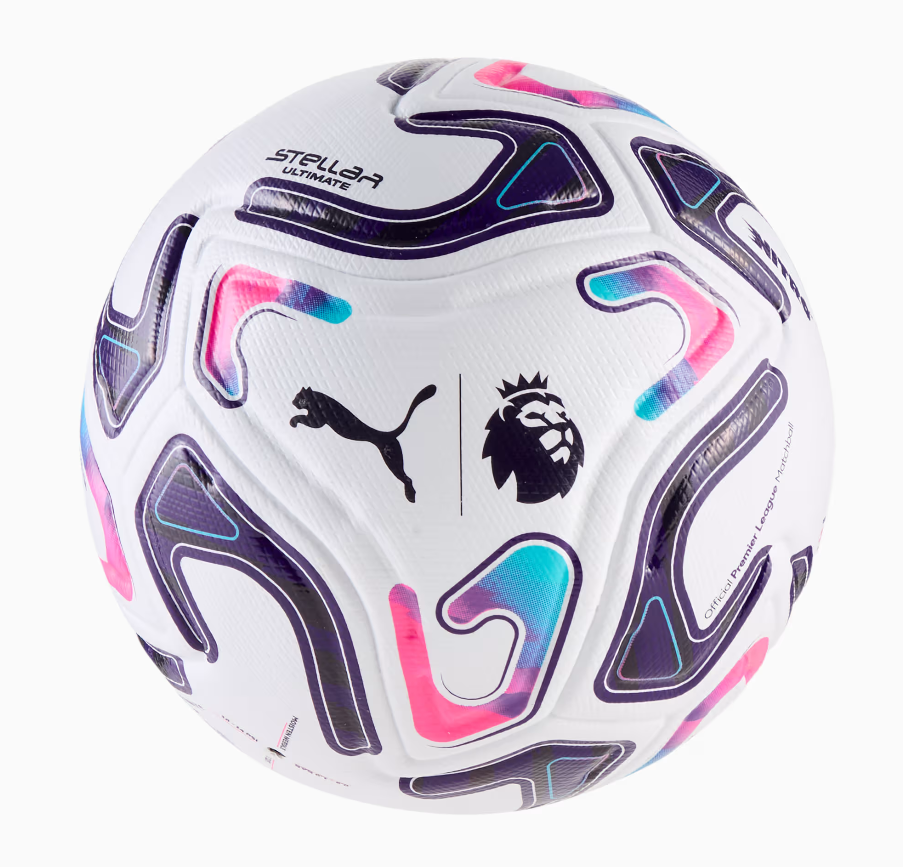

Scientists have confirmed the Puma Premier League ball flies further and destabilises earlier and Morgan Rogers was one of its biggest beneficiaries this season.
- Wind tunnel testing confirmed the Puma Orbita carries further and destabilises at higher speeds than the Nike Flight
- Rogers and Liverpool’s Szoboszlai were specifically identified as players who benefited most from the new ball
- McGinn joked about Rogers’ long-range goals: “It’s cheating, isn’t it? He got to experience the ball before we did”
- The new 2026-27 Puma Stellar Nitro Ultimate has been revealed with nitrogen-infused foam and new surface texturing
Science behind it. Why the Puma ball travelled further
When Premier League clubs switched from Nike to Puma ahead of the 2025-26 season, most supporters barely registered the change. However, a team of sports scientists in Japan, working with physicist John Eric Goff, have now confirmed what players, managers and supporters noticed throughout the campaign. The Puma Orbita behaves differently in the air to its Nike predecessor.
The testing was simple in concept. Both balls were placed in a high-speed wind tunnel and pummelled with air. The results were clear. The Puma ball, smoother than the Nike Flight, with less prominent grooves and panelling, carries further through the air and destabilises earlier. In aerodynamic terms, its drag coefficient changes at a higher speed. The practical result is a ball that travels greater distances and begins moving unpredictably before a goalkeeper can fully read its flight.
The implications for long-range shooting were significant. When a ball destabilises at higher speed, it moves late, dipping, swerving, and curling in ways that are genuinely harder to save. Several Premier League goalkeepers noticed it immediately. Arsenal’s David Raya said after conceding one particular long-range goal: “It’s going away from me so it’s harder to gauge and save.” Pep Guardiola called the ball “tricky.” Former Nottingham Forest manager Sean Dyche noted it was “a bit lighter.”
Morgan Rogers is the player who benefited most
Rogers’ long-range contributions were so frequent and so spectacular that his own captain addressed the subject directly and with characteristic wit. “It’s cheating, isn’t it?” McGinn told reporters with a smile. “Because he’s got a Puma deal. So he got to experience the ball before we did.” That joke, delivered with the timing of a man who had watched Rogers bend shot after shot into top corners, captured exactly the mood around Villa Park during the season’s most prolific scoring period.
Among the specific beneficiaries identified in the analysis, two names stood out: Liverpool’s Dominik Szoboszlai and Aston Villa’s Morgan Rogers. Both players produced a disproportionate number of memorable long-range goals during the season’s opening months and the wind tunnel data provides at least a partial scientific explanation for why.
The scientific data also tracked a notable slowdown in long-range scoring as the season progressed. The rate was significantly higher in the opening months and declined as players and teams adjusted to the ball’s specific characteristics. That pattern aligns precisely with Rogers’ own season arc — explosive and prolific early, and more selective later as defences adapted.
The new ball. What changes next season
The 2026-27 Premier League season will be played with Puma’s new Stellar Nitro Ultimate — revealed this week ahead of Villa’s Champions League campaign. The new ball retains the neon pink and purple colourway of its predecessor but introduces nitrogen-infused foam for improved energy transfer and unique panel construction with grooved surface texturing for greater stability at speed.
That last feature of increased surface roughness is precisely what the science suggests will reduce the long-range goal phenomenon. Rougher surfaces stabilise drag coefficients. The ball destabilises later and at lower speeds. Goalkeepers have more time to read the flight.
Whether Rogers and Szoboszlai maintain their long-range output with a more stable ball remains the most intriguing individual question heading into next season. The physicist’s assessment is pointed. “That’s making us wonder if the new ball is possibly going to be seen by the players as not travelling quite as far,” Goff stated.
ReadAstonVilla Verdict
The science is clear: Rogers’ long-range goals were genuine and spectacular, and the ball helped. However, reducing his output to aerodynamics alone misses the point entirely. The Europa League Player of the Season led the entire competition for chances created regardless of ball type. His quality is real. The Puma ball just gave it an extra dimension. Whether the Stellar Nitro Ultimate changes things next season, or whether Rogers simply adapts, is one of the most fascinating individual storylines heading into the Champions League campaign.







Comments.
Loading comments…