

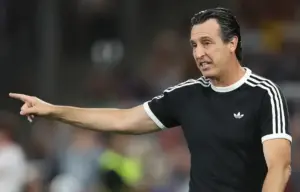
Unai Emery has dismissed suggestions Aston Villa have developed a cosy relationship with Chelsea despite an extraordinary run of transfer business between the two clubs.
Chelsea completed the signing of Emiliano Martinez from Villa on Sunday, becoming the latest player to move between Villa Park and Stamford Bridge.
Villa have also gone the other way this summer, bringing in Nicolas Jackson and Alejandro Garnacho, while Morgan Rogers completed a £117million switch to Chelsea earlier in the window.
Asked about the relationship between the clubs, Emery delivered a typically forceful response.
“They want to kill us. And we want to kill them,” Emery said, with the comments reported by The Guardian.
Unai Emery rejects Aston Villa-Chelsea friendship talk
The volume of business between the clubs has naturally attracted attention.
Martinez’s £7.5million move came only days after Villa completed their club-record deal for Jackson, while Garnacho is also spending the season with Emery’s side.
Earlier in the summer, Villa accepted Chelsea’s £117m offer for Rogers.
That deal represented a huge financial return, although [Rogers immediately underlined what Villa had lost with a record-setting Chelsea debut] — coverage which can be linked to ReadAstonVilla’s existing piece.
Emery, however, does not view those transfers as evidence of any special relationship between the clubs.
He described the connection as being about “a deal for money and a deal for players”, rather than friendship.
That distinction is important.
Chelsea have been willing to pay substantial sums for Villa players, while Emery has been equally happy to recruit players he believes can improve his own squad.
Villa’s [£117m sale of Rogers to Chelsea] was one of the biggest deals of the summer, but Emery has since rebuilt his attack around new arrivals.
Chelsea and Aston Villa reshape each other’s squads
The latest sequence has accelerated dramatically.
Villa have now [handed Zion Suzuki the No.1 role after Martinez completed his Chelsea move], while Jackson could make his Villa debut against Arsenal on Monday night.
Jackson’s arrival is particularly significant because Emery pushed hard to reunite with the striker after previously working with him at Villarreal.
The Villa boss had originally hoped to have Jackson and Ollie Watkins in the same squad before Watkins completed his move to Al-Hilal, according to reporting already covered by ReadAstonVilla.
Chelsea, meanwhile, have taken two of Villa’s most influential players in Rogers and Martinez.
That explains why Emery is unwilling to portray the clubs as allies despite the constant flow of negotiations between them.
The deals may suit both sides financially and professionally, but Emery’s message could hardly have been clearer.
Once the transfer business stops, Chelsea remain a direct rival.






Comments.
Loading comments…